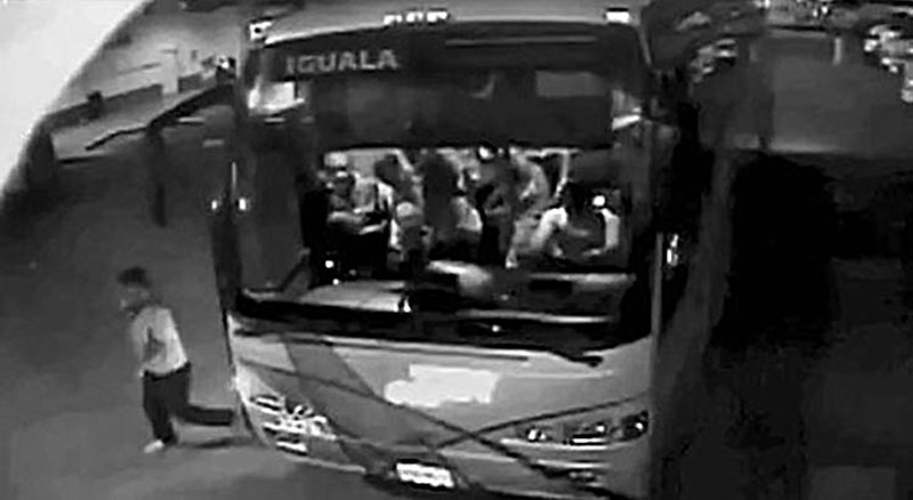
Washington, D.C., September 26, 2025 - To mark eleven years since the enforced disappearance of 43 Mexican students from the Ayotzinapa college, the National Security Archive for the first time publishes text messages that were intercepted by the U.S. Drug Enforcement Administration during a narcotics investigation that contain critical information about what happened on the night of September 26, 2014, the cover-up that followed, and who was responsible for attacking the students. The eleventh anniversary of the enforced disappearance of 43 Mexican students from the Ayotzinapa college brings a grim reckoning. To date, no one has been held accountable for the tragic “night of Iguala” that exploded on September 26, 2014. No mass graves have been located, no remains identified since the bone fragments of two boys found in 2021. Tomás Zerón, the Mexican official accused of orchestrating the cover-up that destroyed the early investigation, remains a fugitive protected by Israel. And the latest special prosecutor overseeing the case just stepped down, leaving the investigation in shambles; one parent of the missing students lamented that his tenure represented “three years lost.” In a strange twist, however, this year did see criminal convictions of people connected to the Ayotzinapa case – but not for the disappearance of the 43 young men, and not in Mexico. Two members of Guerreros Unidos, the organized crime group accused of taking part in the 2014 attack against the students, pleaded guilty to heroin smuggling after separate U.S. trials. Adán Casarrubias Salgado, one of four brothers who ran Guerreros Unidos in Mexico, was sentenced in March to eleven years in federal prison. Pablo Vega Cuevas, the head of the group’s trafficking operation in Chicago, received a ten-year sentence but was given supervised release on August 19 for time served, after having cooperated with the U.S. Drug Enforcement Administration (DEA). Though the two men were recently sentenced, the U.S. investigation into the Chicago cell of Guerreros Unidos unfolded over 16 months in 2013-14 – before, during, and immediately after the disappearance of the 43 students in Iguala, Guerrero. The documents include hundreds of text messages sent between the Chicago traffickers and their bosses and buddies in Mexico that were electronically intercepted by the DEA as evidence of the drug ring they were surveilling. But the intercepts also contain important evidence about what happened on the night of September 26, 2014, and who may have been responsible for the disappearances. It’s impossible to say now what might have happened if that information had made its way into the hands of investigators in Mexico immediately after the boys were taken, but there is no doubt they would have offered critical leads that exist nowhere else. We preface the intercepts with an extended version of an interview we did originally for our podcast, After Ayotzinapa. The interview is with Mark Giuffre, who supervised the DEA’s Chicago case. His account of how his investigation unfolded and what the DEA learned along the way provides useful context for understanding the significance of the Guerreros Unidos text messages. |